
Autonomous vehicles (AVs) are often celebrated as the future of transportation: safer roads, optimized traffic flow, and improved mobility for all. But behind the sleek sensors and AI-driven decision-making lies a less-discussed challenge: power consumption.
A recent analysis highlighted by InsideEVs* explores how autonomous systems significantly increase energy demand compared to traditional vehicles. While much of the conversation focuses on batteries and range, there’s a deeper layer to consider: inspection, component-level efficiency, and maintenance.
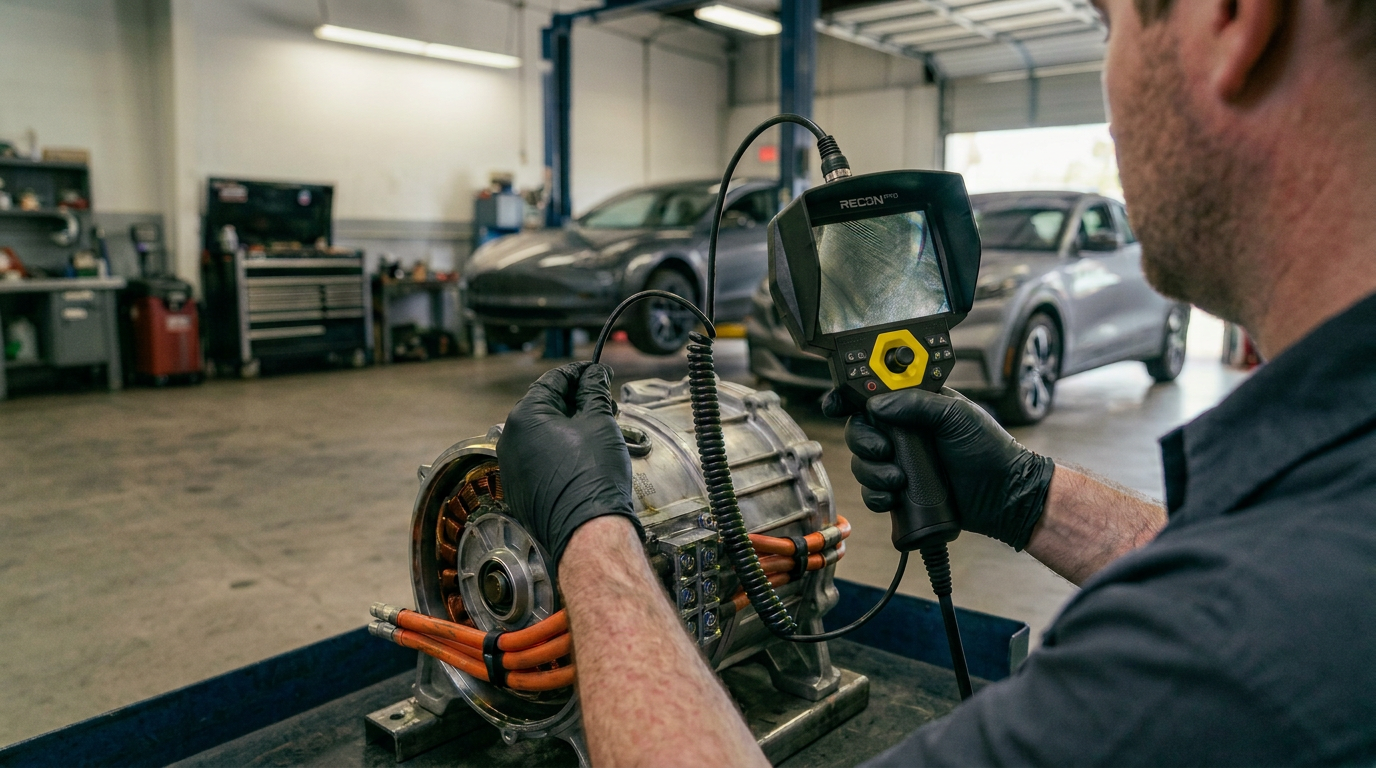
For engineers, technicians, and manufacturers, this is where industrial borescopes play a critical role.
*https://insideevs.com/features/794319/autonomous-car-power-consumption/
Autonomous Vehicles: More Tech, More Power Demand
Unlike traditional cars, autonomous vehicles rely on a complex ecosystem, including:
- LiDAR systems
- Radar sensors
- Powerful onboard computers
- High-resolution cameras and imaging systems
- Continuous data processing and storage
Onboard computing and sensor systems can significantly increase total vehicle energy consumption, particularly in higher levels of autonomy. This creates a fundamental challenge for electric vehicles (EVs):
More autonomy means higher power demand and reduced driving range.
For OEMs and EV engineers, improving autonomous vehicle energy efficiency is now a top priority.
*https://www.mckinsey.com/industries/semiconductors/our-insights/the-rise-of-edge-ai-in-automotive
Beyond Batteries: Why Inspection Impacts Energy Efficiency
While battery innovation plays a major role in EV performance, component efficiency and system health are equally critical. Small internal issues such as overheated electronics, damaged wiring, or airflow restrictions can increase energy consumption and reduce overall system efficiency.
This is especially important in:
- Autonomous vehicle manufacturing
- EV maintenance and repair facilities
- Aerospace and robotics industries using similar sensor stacks
Industry guidance emphasizes that early defect detection through non-destructive testing helps prevent performance degradation and system inefficiencies.
*https://www.asnt.org/what-is-nondestructive-testing
The Role of Borescopes in High-Tech Vehicle Systems
As vehicles become more compact and complex, traditional inspection methods are no longer practical. Disassembly is time-consuming, costly, and risks damaging sensitive components.
This is why professionals rely on industrial borescopes for inspections.
Advanced tools like Industrial Video Borescopes allow technicians to inspect hard-to-reach areas without dismantling critical systems. These tools allow professionals to:
- Inspect internal wiring channels without disassembly
- Identify heat damage in confined electronics compartments
- Detect debris or defects in sensor housings
- Evaluate battery enclosures and cooling pathways
By identifying inefficiencies and issues early, borescopes help reduce unnecessary power consumption and extend component lifespan.
*https://spiborescopes.com/recon-pro/
Precision Maintenance for Autonomous Vehicle Systems
Autonomous systems operate within tight tolerances, where even minor defects can lead to performance degradation and energy loss. A partially obstructed sensor or degraded connection can force the systems to work harder, drawing more power in the process.
Routine inspections using high-resolution borescopes help maintenance teams:
- Ensure sensors remain clean and unobstructed
- Verify cooling pathways are functioning properly
- Maintain optimal electrical and thermal performance
- Detect early signs of wear or component failure
This proactive approach supports both EV efficiency optimization and long-term system reliability.
Applications Across High-Tech Industries
The challenges of power consumption in autonomous systems extend far beyond the automotive sector. Industries such as aerospace, defense, and industrial automation rely on similar sensor-driven, high-compute environments.
In each of these sectors, borescope inspection technology is a key factor in managing efficiency, reducing downtime, and preventing costly failures.
SPI Borescopes supports these industries with high-performance inspection solutions designed for demanding environments. Whether you’re working on next-generation vehicles or advanced robotics, having the right inspection equipment is essential.
The Bigger Picture: Efficiency Through Insight
As autonomous technology continues to evolve, improving energy efficiency will require more than better batteries and software. It will depend on visibility inside critical systems during inspection and maintenance.
Industrial borescopes are designed to provide that visibility, helping engineers and technicians maintain peak performance, reduce power waste, and ensure reliability in increasingly complex systems.
TLDR:
Autonomous vehicles consume significantly more power due to their advanced sensors and computing systems, making efficiency a growing challenge for EV manufacturers and engineers. Regular internal inspections with industrial borescopes help teams identify inefficiencies and defects early, prevent energy loss, and maintain optimal system performance, leading to improved efficiency, extended system lifespan, and prevention of costly failures. SPI Borescopes delivers the precision inspection tools professionals rely on to maintain high-performance, energy-efficient systems across the most advanced industries.
Related Articles
A recent EASA survey found that aviation professionals are cautiously optimistic about AI in aviation safety, rating acceptance at 4.4 out of 7. Key concerns include performance limits, privacy, accountability, and the risk of de-skilling.

This is a defining period for the oil and gas industry, with the pressures of ultimately shifting to sustainable energy sources already being felt, and the competitive market striving for greater efficiency constantly.
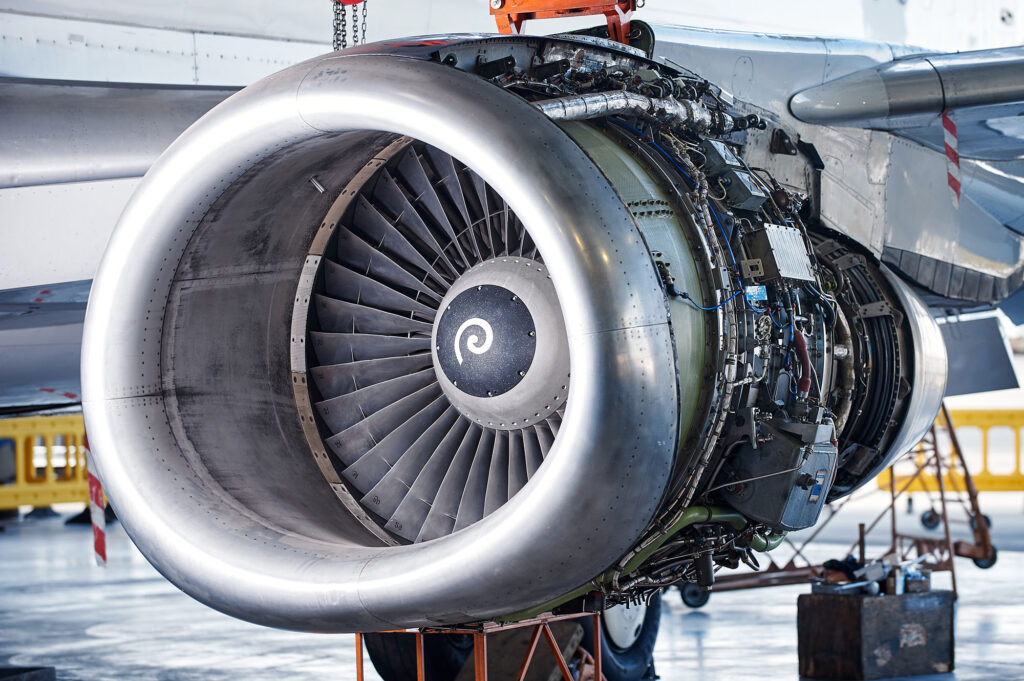
The aerospace industry is poised for unprecedented growth, with the global market for aerospace parts manufacturing projected to soar to USD 1.29 trillion by 2031.
